How to Read Fat-Free and Low-Fat Food Claims
Learn what fat-free and low-fat food claims actually say, then compare serving details, nutrients, and ingredients to choose a product that fits your needs.
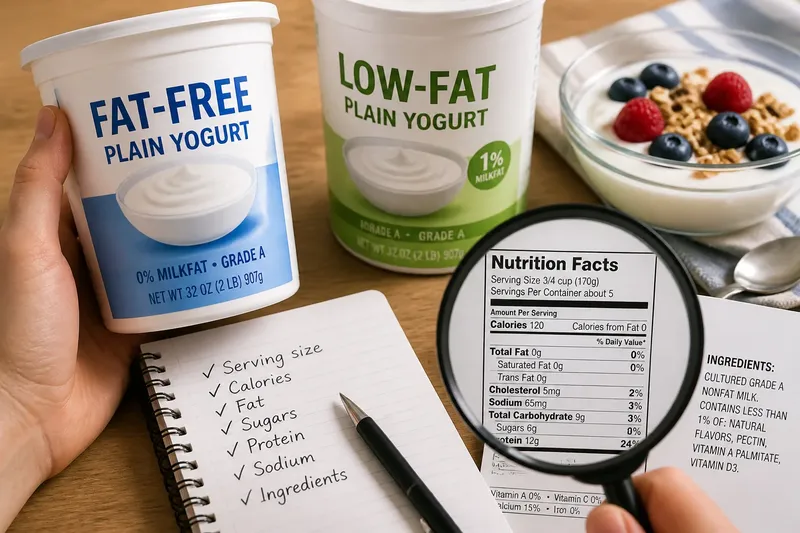
“Fat-free” on a yogurt lid describes fat, not the whole food. To read fat-free and low-fat food claims well, treat each as a narrow statement and check the package details that answer your actual question.
What the claim says
In the United States, regulated nutrient-content terms have defined conditions for use. “Fat-free” and “low-fat” refer to different claims about fat; neither is an overall judgment about nutrition, taste, or suitability for a particular person.
“Reduced” and “less” point to a comparison with a reference product or version. Look for the package’s comparison wording: a reduction does not, by itself, tell you how much of the nutrient the food contains or whether the amount suits your preferences.
Claims are useful shelf shortcuts because they put one product feature in view. They do not replace the Nutrition Facts panel, ingredient list, or information about how much you plan to eat.
Compare the details
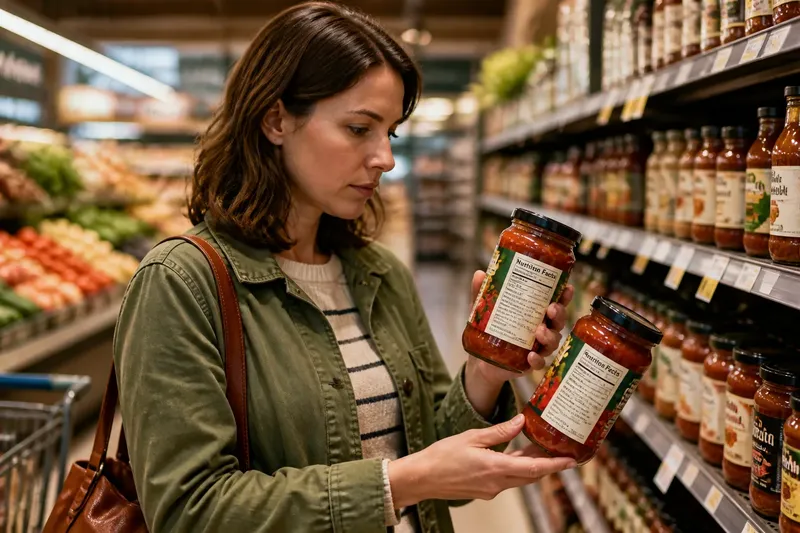
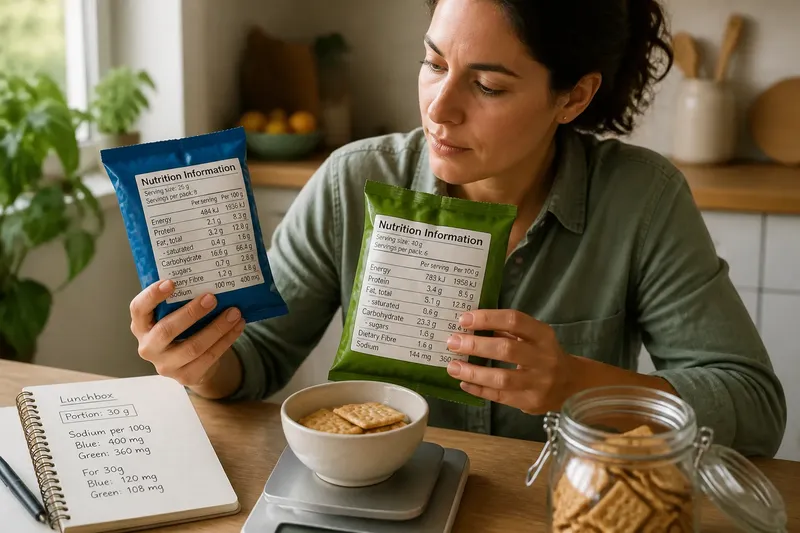
Start with the exact wording, not a color band or a picture of fruit. Then check serving size and the nutrients relevant to your choice on the Nutrition Facts panel. If you expect to eat a different amount from the listed serving, keep that difference in mind when comparing packages.
The ingredient list answers a different question: what is in the product? Ingredients are listed in descending order by weight. For yogurt, the list may help you check for fruit, sweeteners, thickeners, or flavorings, while the panel summarizes specified nutrient amounts.
Imagine you are choosing plain yogurt to eat with oats and berries, and you prefer a less rich texture. One tub says “fat-free” and another says “low-fat.” You read each serving size, compare calories, fat, sugars, protein, and sodium according to your priorities, then scan both ingredient lists. If the first has the texture you prefer and its other label details fit your needs, you choose it; if not, you choose the second. The result is a decision based on your intended breakfast and several label details, not on a front claim alone.
When do claims help?
Does fat-free mean calorie-free?
No. The claim concerns fat, not calories. Check calories per serving on the Nutrition Facts panel and compare that serving with the amount you expect to eat.
Is low-fat always a better choice?
No single claim ranks a food for everyone. Compare the nutrients and ingredients that matter for your preferences and needs, and seek qualified advice if a medical condition requires individualized nutrition guidance.
What does reduced-fat mean?
It describes a comparison with a reference, as stated on the package or under applicable rules. Check the comparison wording, then read the panel to see what the product provides per serving.
Should the front claim decide?
Use it to narrow your options, not to make the whole decision. Check serving information, relevant nutrients, and ingredients before choosing.
A useful label check
- Observation: The front says “fat-free.” If you want to compare fat, then check the fat line on the Nutrition Facts panel; if your main concern is something else, compare that nutrient instead.
- Observation: The wording says “reduced” or “less.” If the package identifies a reference, then use that comparison as context; if it does not answer your question, compare the nutrient amounts per serving directly.
- Observation: The listed serving differs from the amount you expect to eat. If so, then account for the portion difference; if the listed serving matches your plan, compare the panel as printed.
- Observation: Calories or sugars are important to your choice. If so, then compare those panel lines; if they are not relevant to your decision, focus on the details that are.
- Observation: You want to know whether the yogurt contains fruit or a particular sweetener. If so, then read the ingredient list; if composition is not part of your choice, do not infer it from the front claim.
- Observation: A package uses a fruit image, color, or serving suggestion. If that impression matters, then verify the actual product details on the label; if the details do not match what you want, consider another product.
It is not worth decoding every decorative phrase as though it carried a hidden nutrition message. Focus on explicit claims and the label details that resolve your specific question.
Fat-free and low-fat food claims are most useful when they help you spot the feature you want to compare. Let the wording identify that feature, then use the serving details, Nutrition Facts panel, and ingredients to make a choice that fits the way you plan to eat the food.