The Best-Before Date Is Not a Freshness Score
A best-before date is not a freshness score. Learn how to interpret the wording, check storage and package condition, and make a more informed choice.
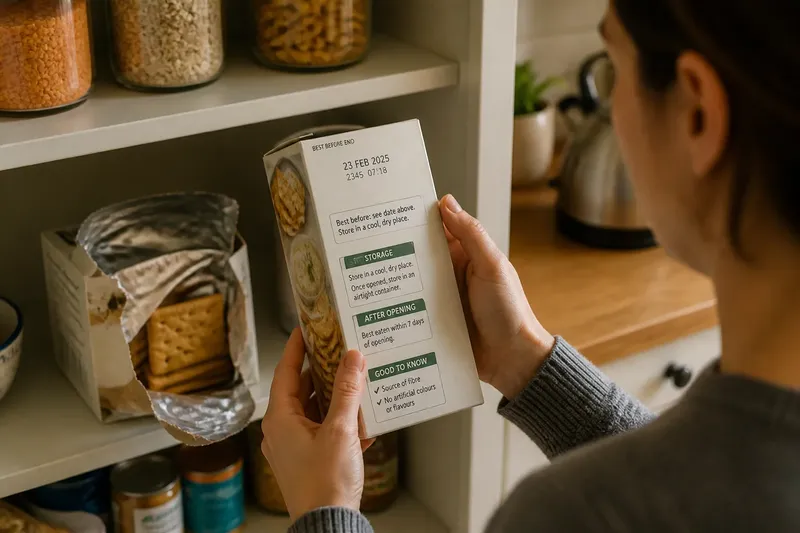
A best-before date tells you about expected quality, not exactly how fresh a food is today. To read a best-before date well, start with the full wording, then check the storage directions and the package condition.
That approach helps with an unopened box that looks fine after its date, and with a package that has been opened or stored poorly beforehand. The printed date is useful, but it cannot describe every condition the food has experienced.
Date wording
“Best before” generally refers to the period when the maker expects a product to retain its intended quality, such as flavor, texture, or appearance, when stored as directed. It is not, by itself, a precise freshness rating or a universal instruction to discard the food on that date.
“Use by” may have a different, safety-related meaning, depending on the product and local rules. The phrases are not interchangeable, so read the complete wording and follow product-specific directions rather than assuming every date label works the same way.
Storage and packaging
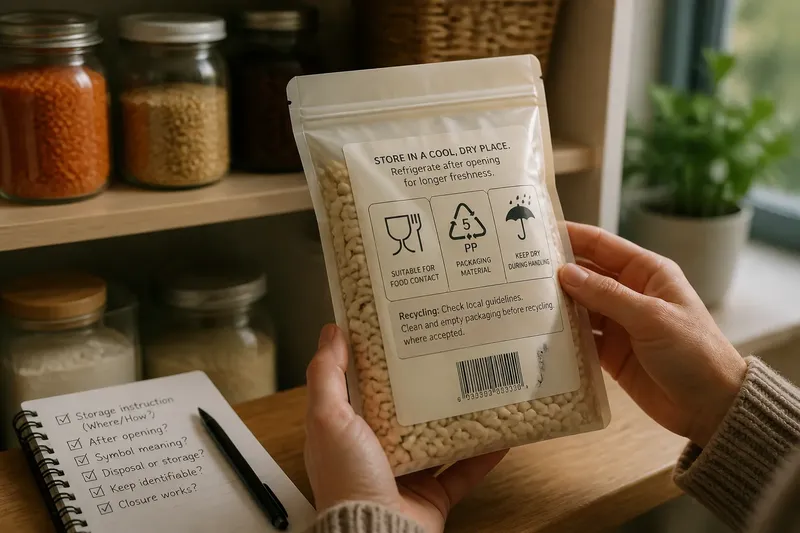
A date assumes particular storage conditions. A sealed pouch, paper carton, and glass jar can each protect food differently from air, light, or moisture. Once opened, a package is exposed to new conditions, so the original date may no longer answer how long it should be kept.
Check the label for directions such as “refrigerate after opening” or “use within” a stated period. Also look for a broken seal, a leak, or unexpected swelling. Those observations can affect your decision regardless of the date; if you have a safety concern, follow local food-safety guidance or ask a qualified professional.
It is not worth trying to calculate a product’s exact age from its best-before date. Unless the package separately provides a production date or other relevant information, the date does not supply enough detail for that calculation.
Questions readers ask?
Does “best before” mean unsafe afterward?
Not necessarily: the phrase generally concerns expected quality, but it does not establish that a product is safe before or unsafe after the date. Product type, storage, package condition, and local rules matter.
Does the date apply after opening?
Not automatically. Opening changes the food’s exposure to air and handling, so follow any after-opening directions on the package instead of relying on the unopened-product date.
Can appearance confirm freshness?
Appearance may reveal visible changes, but it cannot answer every question about quality or safety. Consider the label, storage history, and package condition together, and do not treat a normal appearance as proof.
Compare the details
Imagine you find an unopened box of crackers in a dry cupboard after its best-before date. The inner wrapper is intact, and the package says to store it in a cool, dry place. You note that the date concerns expected quality, confirm that the stated storage condition matches, and inspect the wrapper; if it is intact, you can decide whether to eat the crackers based on your comfort and applicable guidance, while recognizing the date alone does not describe their texture or safety.
Now imagine the same box has a torn inner wrapper and has been kept beside a steamy kettle. The printed date is unchanged, but the packaging and storage observations differ. You would not use the date to settle the decision; follow food-safety guidance for the product, and discard it if that guidance calls for doing so.
- Wording: If the package says “best before,” treat it as a quality cue; if it says “use by,” follow the product’s safety-related directions and applicable local guidance.
- Opening: If the package is open, check for after-opening instructions; if none appear, do not assume the unopened date sets a keep-after-opening period.
- Storage: If the food was kept as directed, use that as one part of your decision; if it was stored outside those conditions, consult product-specific or local guidance instead of relying on the date.
- Seal: If the seal is intact, continue checking the label and storage history; if it is broken, do not let an unpassed date overrule that observation.
- Package condition: If there is a leak or unexpected swelling, follow food-safety guidance and avoid treating the printed date as reassurance; if the package is undamaged, proceed with the other checks.
- Visible changes: If you notice an unexpected change, use appropriate safety guidance rather than tasting to investigate; if nothing visible has changed, remember that appearance alone cannot confirm safety.
A best-before date is most useful when read alongside the exact wording, storage directions, opening status, and package condition. That combination offers a clearer basis for a decision than treating the date as a freshness score stamped on every product.